Join our newsletter

Insights and updates delivered straight to your inbox.


Start Your Digital Adventure: Discover The Fun Before The Business

Start Your Digital Adventure And Discover What’s Possible

What if retirement gave you the freedom to try something you’ve always wanted to?

Your Experience Could Open A New Door

You’ve spent a lifetime learning. Now discover how enjoyable it can be to share that knowledge.

One Small Action Can Start Something Wonderful

You don’t need a business plan, expensive software, or technical qualifications to begin. You need curiosity, something you enjoy, and a willingness to try one useful activity.

You Don’t Have To Build A Business To Begin

Imagine retiring after forty years of working, solving problems, paying bills and making sure everybody else gets what they need. Somebody suggests you start an online business, and suddenly you’re faced with unfamiliar words like website hosting, sales funnels, affiliate marketing, digital products and artificial intelligence. Before you’ve even discovered what interests you, it starts to sound like another full-time job. That’s hardly the reward you’d expect after a lifetime of work. Yet there’s another way to approach the digital world. Start Your Digital Adventure by discovering something you genuinely enjoy doing. Perhaps you’ve always liked gardening, repairing things, baking, organising information or explaining how something works. You don’t have to turn that interest into a commercial enterprise immediately. You can begin by exploring what your knowledge might help you create.
Here’s a question worth considering. How many useful things have you learned over the years that somebody younger, less experienced or completely unfamiliar with your subject might appreciate knowing? You probably wouldn’t recognise them all immediately. Familiar knowledge rarely feels remarkable to the person who possesses it. A retired carpenter might know how to plan a simple woodworking project. A former office manager may have developed excellent organisational habits. Someone who enjoys cooking could explain how to prepare meals without wasting ingredients. These aren’t necessarily revolutionary discoveries, but they may help someone encountering the same problem for the first time. More importantly, explaining them could be enjoyable. Our workshop starts with that possibility, rather than asking you to find customers, buy equipment or commit to a business before you know whether you like the work.

Start Your Digital Adventure With Curiosity, Not Pressure
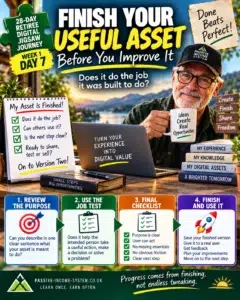
Start Your Digital Adventure Awesome Secrets For YouMany people approach retirement with an understandable desire to escape schedules and obligations. They’ve spent decades being told when to arrive, what must be completed and how much time they have left. It would be rather unfortunate to replace those demands with another collection of digital deadlines. The difference between an enjoyable hobby and an exhausting project often comes down to who controls the workload. When you decide what to create, how long to spend and whether to continue, the activity belongs to you. When every task becomes another obligation, the enjoyment can quickly disappear. That’s why we’re introducing a different starting rule. You don’t need to complete twenty lessons, publish something every day or master several applications. Choose one enjoyable action that moves your curiosity forward. Finish it, appreciate the result and decide what you’d like to explore next.
TODAY’S QUICK WATCH
Watch Today’s Video
See today’s problem-solving lesson in action.


▶ Watch Video

You might be wondering what qualifies as an enjoyable action. It could be writing down a story from your working life, asking an AI assistant to help organise a favourite recipe, discovering how to create a simple illustration or contributing a helpful comment to a community discussion. The action doesn’t need to impress anybody. It should simply leave you with something useful, interesting or satisfying. You may have clarified an idea that was confusing yesterday. You may have discovered a creative ability you had not previously considered. Perhaps you’ve met somebody who shares an interest you thought was unusual. The value comes from making a real connection between what you know, what you enjoy and what you can now do. You don’t need permission from an online business expert to consider that a successful day.

Consider a retired plumber who spent years organising central heating installations. During his working life, complicated contracts involved office administration, radiator engineers, boiler specialists and electrical workers, each with different responsibilities. His job wasn’t simply to install equipment. He had to understand how the work fitted together and how delays in one area could affect another. After retirement, he begins wondering whether the lessons he learned about organising people could be useful beyond the plumbing trade. He might write a short explanation about giving every specialist a clear responsibility. An AI assistant could help arrange his rough notes into a readable lesson. The finished piece wouldn’t make him a business consultant or guarantee an audience. It would, however, demonstrate that practical experience can become something worth sharing.
That first little experiment might reveal an unexpected interest. Perhaps our retired plumber enjoys explaining how different people work together. Perhaps he discovers that creating illustrations makes his memories easier to communicate. He might even develop an interest in making short videos. None of these possibilities requires him to abandon his trade background. His experience becomes the material from which something new can grow. This is an important difference between creating content and inventing expertise. We aren’t encouraging retirees to pretend they know subjects they’ve never studied. We’re helping them recognise the value of what they’ve genuinely learned, while checking facts and avoiding advice that requires current professional qualifications. Your knowledge supplies the starting material. Digital tools can help you organise and present it. Start Your Digital Adventure by recognising how the practical knowledge you’ve already gained could become something useful for another person.

Why Start Your Digital Adventure With An AI Crew?

Artificial intelligence can appear intimidating when it’s introduced through demonstrations full of technical expressions. You may hear about agents, automated workflows, advanced prompts and increasingly complicated applications. It’s easy to imagine that understanding all this technology requires years of computer training. But what if we described the same opportunity in familiar terms? Imagine having a small Crew of assistants available to help with different jobs. One researches a question. Another helps organise your writing. A third develops visual ideas. Another checks whether the finished explanation makes sense. You remain the person deciding what needs doing. Suddenly, artificial intelligence begins to resemble a team of helpers rather than a mysterious machine demanding that you learn a new technical language.
You may recognise that arrangement from your own working life. A building contractor doesn’t expect one person to perform every specialist task. A busy office assigns different responsibilities to different staff members. Even organising a family celebration involves deciding who handles invitations, food, transport and arrangements. The principle is familiar: clear responsibilities make complicated work easier to manage. Our AI Personal Assistance Crew follows that same idea. We use AI to assist with research, writing, graphics and checking, but we don’t hand over ownership of the project or pretend the technology is always correct. The human remains the Gaffer, choosing the direction, supplying the experience and approving the result. The Crew makes creating something useful more manageable and enjoyable.
Here’s the part that may surprise you. You don’t necessarily need four different AI applications to have four specialist roles. One general-purpose assistant can often help with several jobs when you give it one clear instruction at a time. You might first ask it to organise your notes, then review the result before requesting a beginner-friendly explanation. Later, you can ask it to examine the wording for unnecessary repetition or unclear sentences. That’s a much more practical starting point than paying for several subscriptions you don’t yet understand. We’ll show you how four simple job cards, even written on scraps of paper, can make those responsibilities clear. You won’t be expected to become a computer programmer. You’ll be learning how to organise familiar kinds of work with a different sort of assistant.
You’re still the most valuable member of this arrangement. An AI assistant doesn’t possess your life experience. The system can’t truthfully remember the contract you worked on, the customer who taught you an unexpected lesson or the satisfaction you felt when a complicated job finally came together. Suggestions may include wording, explanations and arrangements, but you must decide whether those suggestions reflect what actually happened. The AI can also make mistakes, misinterpret instructions, or present information with unwarranted confidence. That is why checking remains part of the process. We aren’t teaching you to surrender your judgement to technology. We’re teaching you to use helpful digital tools while protecting the knowledge, individuality and common sense you’ve spent a lifetime developing.
And now we arrive at the first great advantage of this workshop. You don’t need to know everything before beginning. You need to know what you’d like to explore and how to ask for appropriate assistance. A retired gardener might begin by creating one printable growing checklist. A former administrator might organise useful advice into a short guide. A retired railway enthusiast might create an illustrated explanation of a favourite historical subject. Each person chooses a different direction, but the organising principle remains the same. Begin with something familiar, use appropriate assistance, check the result and enjoy the achievement. Suppose the experience makes you curious about another project, wonderful. If you decide it isn’t for you, you’ve learned something without committing your retirement to an expensive business experiment.

One Enjoyable Action Could Change Your Retirement Routine

Start Your Digital Adventure With One Finished Result

There’s a difference between spending time learning something and finishing something you can actually use. Watching an interesting tutorial may introduce a new possibility, but the feeling of achievement usually becomes stronger when you apply what you’ve learned. You could spend an entire afternoon watching videos about artificial intelligence and still wonder what to do when you close the computer. Alternatively, you might spend twenty minutes creating a short explanation of something you understand well and finish with a useful piece of work. That’s the principle behind our One Enjoyable Action Rule. Every practical session should aim towards one small, recognisable result. It could be an idea, an illustration, a short video, an improved paragraph or a useful conversation. You aren’t racing against anybody. You’re simply giving yourself a reason to feel pleased with what you’ve accomplished.
We want that first achievement to feel exciting, so creating your own AI avatar will be one of our earliest practical activities. Imagine choosing a friendly digital character, giving it a name and discovering how it can speak words you’ve written. Perhaps your character resembles you. Perhaps it’s a colourful cartoon, a distinguished-looking presenter or something completely imaginative. You don’t have to show your real face online, and you don’t have to record yourself speaking if a suitable authorised voice option is available. Your avatar is simply a way of presenting your ideas. Some tools provide convincing talking-head animation, while others are more limited or require payment. We’ll concentrate on helping you understand the principle and make a sensible choice rather than pretending every application offers the same features.
Now imagine watching your first short video. Your new character introduces a favourite hobby in a friendly voice. It might explain why you enjoy gardening, what first attracted you to local history or why you believe a particular lesson from working life deserves to be remembered. Perhaps the character’s first attempt isn’t quite right. Its voice might sound too formal, or an animated hand might make a ridiculous repetitive movement. That’s part of experimenting. You can adjust the script, choose a different presentation or keep the camera focused on the face and shoulders. The important point is that you’ve directed something new. You supplied the message, made the decisions and produced a result. That wonderful feeling of saying “I DID THAT!” is exactly what we want our apprentices to experience. Start Your Digital Adventure with one creative experiment, then decide whether the experience has made you curious enough to try another.

Start Your Digital Adventure With Like-Minded People

Of course, creating things is only part of the enjoyment. Another discovery awaits people who have never understood why others spend so much time sharing their interests online. You might imagine that Facebook and other communities are places where strangers display their private lives or compete for attention. Yet something rather different happens when you find people who genuinely enjoy the same subject. A person who loves restoring old bicycles can exchange ideas with other enthusiasts. Somebody interested in family history can discuss discoveries with people who appreciate the challenge of uncovering old records. A keen gardener can share a photograph, ask a question and receive an encouraging response. The value isn’t necessarily the number of followers. It’s discovering that a personal interest can become a shared conversation.
Our workshop will introduce suitable Facebook groups and two free Skool learning communities as additional places to explore. The idea is to learn from others, compare different approaches and ask useful questions without feeling that every conversation must lead to a sale. Communities vary in quality, activity and rules, so we’ll encourage you to examine what they offer before treating their advice as reliable. You may discover helpful teachers, practical demonstrations or people struggling with the same problems you’re trying to solve. Your AI Crew can help explain unfamiliar information, organise notes and compare claims, but important advice still needs checking. We don’t need to know everything ourselves. We need to become better at finding useful information, understanding it and applying it responsibly.
That approach becomes especially valuable given how quickly technology changes. You may spend several weeks learning one application only to discover that its features, prices or interface have changed. Rather than expecting you to memorise every menu, we’ll concentrate on skills that remain useful across different tools. Asking clear questions, assigning responsibilities, checking explanations, organising files and deciding whether something genuinely helps your project are transferable abilities. Your experience managing practical work, planning household activities or organising family responsibilities may already provide useful foundations. The software will change, but your ability to think about what you’re trying to achieve remains valuable. We want you to become more confident in your own decisions, not permanently dependent on a particular application or assistant.

Start Your Digital Adventure Without Business Pressure

Let’s address the financial question, because it’s probably already crossed your mind. Could a digital hobby eventually earn money? Sometimes, yes. People sell useful guides, offer services, recommend suitable products through disclosed affiliate links or develop communities around shared interests. But those possibilities require genuine demand, suitable products, responsible promotion and an understanding of costs. They aren’t automatic rewards for completing a course or publishing a few articles. That’s why we deliberately avoid making income the first measure of success. Our chosen retiree might enjoy writing a book, recording family knowledge, building a small website or helping people learn a hobby without ever wanting to sell anything. A worthwhile digital adventure doesn’t become a failure simply because it remains a hobby.
On the other hand, you may find people repeatedly asking for information you’ve created. Perhaps they would appreciate a printable version, a more detailed guide or help organising a particular task. That could give you a reason to explore a small paid resource. Your AI Crew may help with research, drafting, illustrations and presentation, while you check the accuracy and decide what to offer. You might reinvest any surplus in better tools, hosting or equipment. Equally, you may prefer to keep the project small and enjoyable. Both choices belong to you. The important distinction is that commercial growth should follow an opportunity you’ve examined, not become an obligation imposed on every retired beginner who joins the workshop.
If you eventually decide that you’d like your own website, there’s another possibility. A ready-made website with existing content could provide a starting point for learning how to publish, maintain and improve an online resource. Think about learning to ride a bicycle. You didn’t need to manufacture the frame, wheels and handlebars before discovering how much fun cycling could be. Someone helped you Start Your Digital Adventure, you practised, you wobbled a little, and you gradually learned to control the bicycle yourself. Later, you learned how to look after it. Running an existing website can be approached similarly, provided you’ve properly checked the content, ownership, costs and technical condition. But you don’t need to buy a website to start. Facebook or a simple collection of saved digital creations may be enough for your first activities.
This brings us back to an important promise about your time. Nobody should leave our workshop believing they’re expected to manage several websites, produce three articles a day and operate a dozen social platforms. That might suit somebody who enjoys running a larger digital project, but it isn’t the starting point for a newcomer. Our rule is one enjoyable action a day, with the freedom to do more whenever you genuinely want to. Some days that action may take ten minutes. Other days you may happily spend two hours investigating a fascinating idea. And if life gets in the way, you continue when you’re ready. No one is in a race, and you don’t need to feel like you’ve fallen behind.
The secret is staying connected to effort and satisfaction. Imagine finishing a small illustrated guide on Monday, improving its appearance on Tuesday, and sharing it with a friend on Wednesday. Perhaps Thursday brings an encouraging comment or a useful question. Friday might involve creating a little talking-head introduction using your avatar. None of those activities guarantees money, but each gives you something real to enjoy. You’ll also start to recognise which tasks you prefer and where AI assistance saves you effort. Over time, you’ll have evidence about the kind of digital project that suits your interests and your preferred pace. That’s more useful than purchasing a complicated system before you’ve discovered whether you enjoy using it.

Learn At Your Own Pace And Find Your People

Today’s Apprentice Task: Build One Front Door

Open to See This Video, And This Is What’s Already Built,
Trained & Waiting For Your First Command.
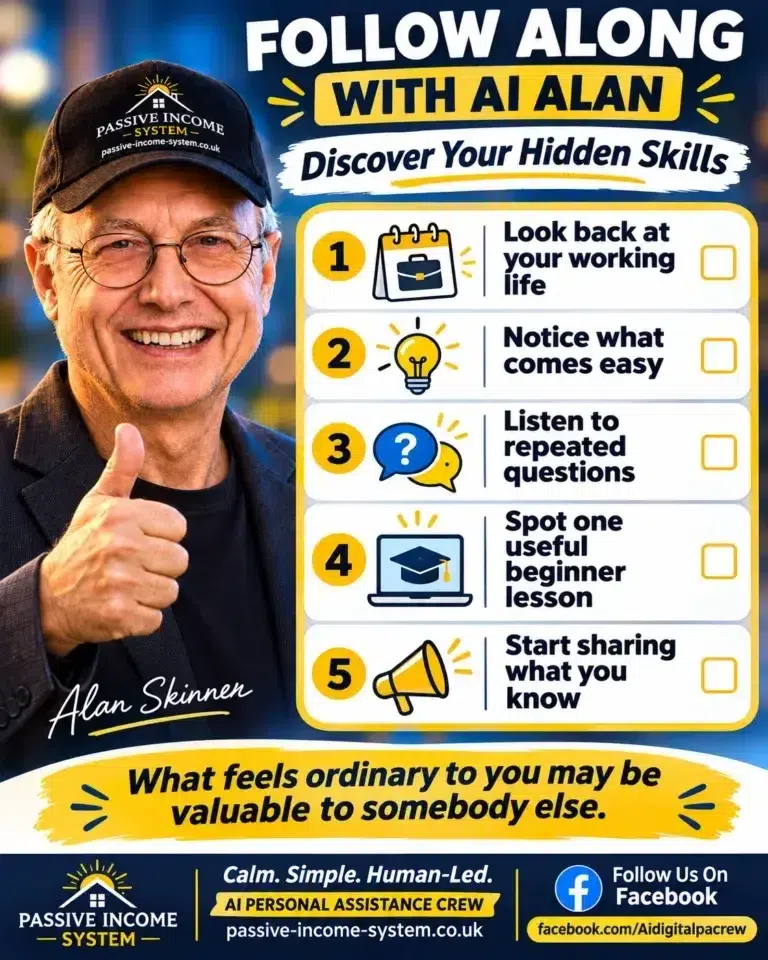
Before we move into the practical lessons, I’d like you to complete one small activity. Take a scrap of paper and write down something you genuinely enjoy discussing. It might be a hobby, a working-life experience, a practical skill or a subject you’ve always wanted to understand better. Beside it, write one thing you would enjoy creating from that interest. Perhaps it’s a short explanation, a useful checklist, a picture or a talking-head introduction. Don’t worry about earning money or whether anybody else will be interested. For now, you’re choosing the subject of your own experiment. The AI prompt that comes with this lesson can help you turn that rough idea into a manageable first action using tools you already have.
Once you’ve chosen, ask yourself three questions. What could I make? What might I learn? Would I enjoy having another go tomorrow? Those questions encourage you to consider the experience rather than judging yourself against somebody else’s idea of online success. A retiree who enjoys sharing family recipes may follow a completely different journey from somebody interested in restoring motorcycles. That’s exactly how it should be. We want your project to reflect the person behind it. To Start Your Digital Adventure Our Crew can help with the organisation, and the workshop can provide the teaching, but your curiosity supplies the direction. Nobody else should decide what makes your retirement enjoyable.
There’s also something worth remembering about the knowledge you’ve accumulated. Some of it may be recorded in notebooks, old photographs, documents or computer folders. Other parts exist only in the stories you tell and the practical decisions you remember making. Much of that experience could disappear from everyday conversation unless somebody finds an enjoyable way to pass it along. Turning one useful lesson into a picture, guide, or video can be a small contribution to preserving knowledge for someone else. That doesn’t mean everything you create must be published publicly. You can choose what remains private, what you share with family and what you’d like to offer a wider audience. The important thing is recognising that your experience still has possibilities.
And if you discover that other people enjoy your work, a further opportunity may emerge. Perhaps they ask questions, share their own experiences or suggest ideas you hadn’t considered. A hobby that begins with one person’s curiosity can develop into an enjoyable circle of learning. You teach something you understand, someone adds a useful observation, and you both discover another question worth exploring. Your AI Crew can help organise the ideas that come up, but the human conversation remains the most rewarding part. You don’t have to become an influencer or collect thousands of followers to enjoy that experience. A handful of people who genuinely appreciate the same subject may provide far more meaningful encouragement than a large audience that never participates.
Our Eight-Window Workshop makes those discoveries approachable. We’ll explore creating an AI avatar, organising digital helpers with simple job cards, recognising useful knowledge, finding like-minded people, preparing resources, maintaining projects and choosing where the journey leads. Each window has a practical purpose, but the real achievement isn’t completing a long checklist. It’s gradually becoming comfortable enough to explore, create and make decisions for yourself. Sticking with a personal hobby is possible. Build a community. You may decide to test a small business idea. Whatever you choose, the direction remains yours, and there’s no need to pretend every option leads to guaranteed income. Start Your Digital Adventure by turning one treasured memory, practical lesson or favourite hobby into something useful that another person can enjoy.
So here’s your invitation. Start Your Digital Adventure without asking yourself to become an expert, an entrepreneur or a computer programmer overnight. Choose something you enjoy. Permit yourself to experiment. Let artificial intelligence help with the jobs it can genuinely do, and keep your own judgement firmly in charge. Finish one useful activity and enjoy the satisfaction. Then decide whether you’d like to do another.
Your first successful day isn’t the day you make a sale. It’s the day you create something useful, learn something new and discover that you’d love to do it again.
That’s where our adventure begins. One enjoyable action. One little achievement. Your own Crew. Your own future. Learn Once. Share Often. AI Personal Assistance Crew Calm. Simple. Human-Led. Reader’s Task: Write down one subject you love discussing and one small thing you’d enjoy creating from it. Use the accompanying AI prompt to discover your first practical action. You don’t need to finish a business today. You only need to choose an adventure you’d enjoy beginning.
Start Your Digital Adventure Awesome Secrets For You

Leave a Comment

Your email address will not be published. Required fields are marked *


Scroll to Top