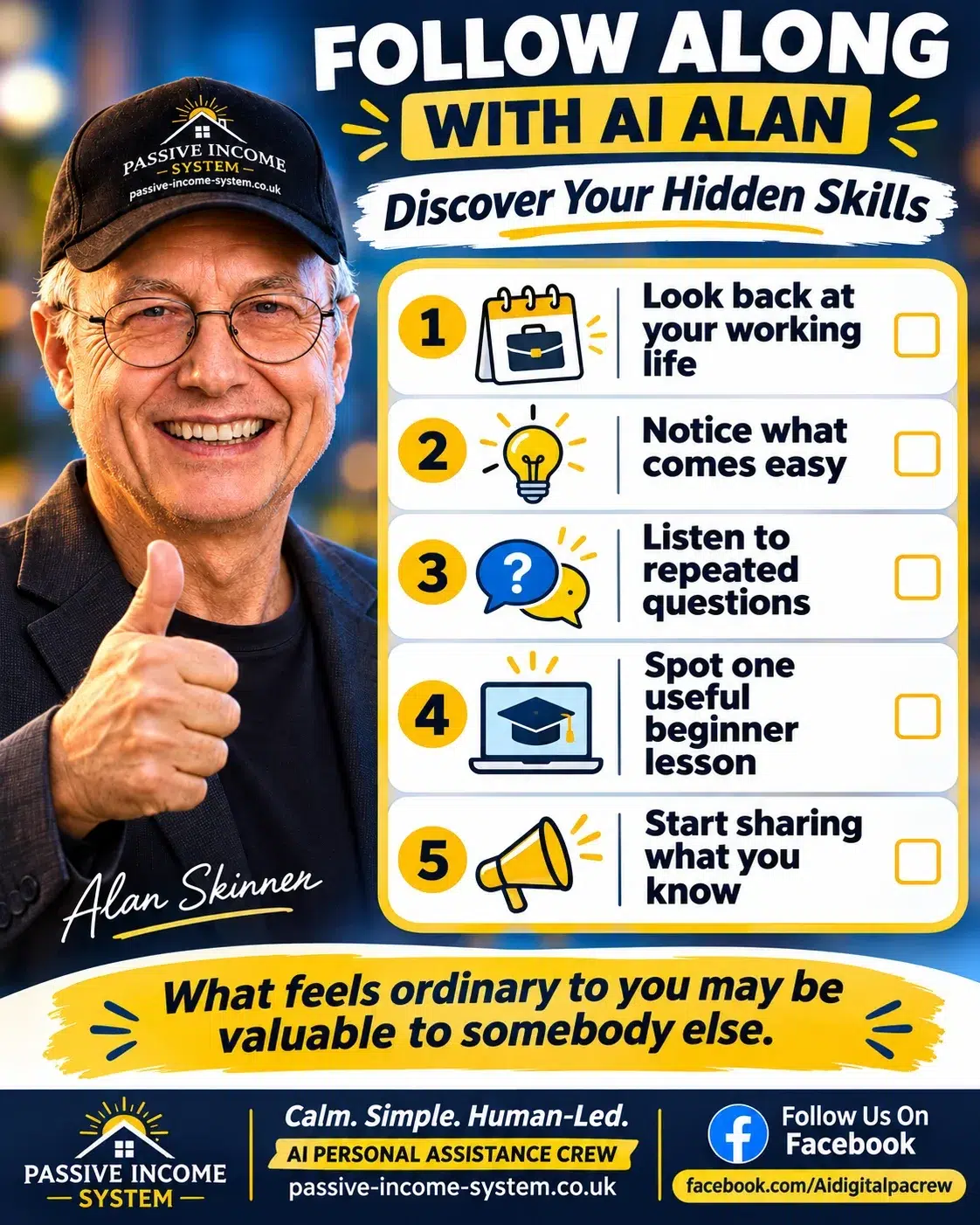
What if something you’ve learned over many years could help a beginner solve a problem that once took you weeks to understand?
Your Experience Could Become A Useful Building Your First Guide
You don’t need to teach everything you know. Start with one familiar problem, one beginner and one clear result.
Building Your First Guide With Five Practical Steps
Discover how to organise your knowledge into a simple resource, test it with a beginner and improve it before considering a paid offer.
What if something you’ve learned over forty years could help a complete beginner avoid weeks of confusion, unnecessary expense or frustrating mistakes?
You’ve already discovered that your working life, hobbies and everyday experience may contain knowledge worth sharing. Now comes the next question. How do you turn that knowledge into something another person can actually use? It’s an exciting possibility, particularly if you’re retired and looking for a worthwhile project you can enjoy from home. You don’t need to become a famous expert, build an enormous training course or master complicated computer software. You need to recognise one difficulty that someone else faces and explain a practical way forward. Our AI Personal Assistance Crew can help you organise your ideas, but the experience comes from you. That’s the foundation of this lesson. When you Building Your First Guide, you’re not trying to sell your working history. You’re helping somebody benefit from what that history has taught you.
The distinction matters because beginners rarely search for somebody’s complete life story when they encounter a problem. They search for an answer they can understand. Someone struggling to organise household paperwork wants a manageable filing routine. A new gardener wondering why vegetables aren’t growing wants to understand what to examine before changing everything. A person learning to use a sewing machine wants to avoid the mistakes that make their first attempt frustrating. Each beginner has a particular difficulty, and each experienced person may possess useful knowledge that makes the next decision easier. The opportunity begins when those two things meet. Your experience becomes more useful when you identify who needs help, what they’re struggling with and which part of your knowledge could make a genuine difference.
Don’t Turn Your Whole Working Life Into One Product
Your first useful digital resource should solve one recognisable problem rather than attempt to teach everything you know.
Imagine asking a retired gardener to write down everything they’ve learned during forty years of growing vegetables. They might begin with soil preparation, move towards watering, discuss pests, explore seasonal planting and eventually produce hundreds of pages. Much of that knowledge could be valuable, but the project would soon become overwhelming. More importantly, a beginner with three containers on a small patio may not need most of it.
They want to grow something successfully without wasting money or becoming discouraged. An experienced gardener who understands that immediate difficulty can offer something far more relevant than an enormous gardening encyclopaedia. They could create a simple beginner’s guide on choosing suitable vegetables, considering growing conditions and establishing a manageable care routine.
This is where our second workshop lesson becomes different from the first. We’ve already looked at uncovering hidden skills. Now we’re concentrating on selecting one useful outcome and building a resource around it. The question changes from “What do I know?” to “What will somebody be able to do after learning from me?” That change helps remove unnecessary information. It also makes the finished resource easier to test. If the beginner can follow the explanation and complete the intended task, you’ve demonstrated a practical benefit. If they remain confused, you have something specific to improve. Either result provides more useful information than simply collecting pages of advice and hoping somebody eventually wants to read them.
Building Your First Guide Through A Clear Beginner’s Outcome
The strongest starting point is one useful result that a learner can recognise and test for themselves.
Suppose Wilson spent thirty-five years working in office administration. He’s comfortable organising documents, checking information and keeping records accessible. Those tasks feel ordinary because he performed them throughout his working life. One afternoon, he discovers that a younger relative who has started working independently struggles to keep track of paperwork. The relative doesn’t want a course in business administration. They want to know how to create a simple system that stops documents from getting lost. Wilson could explain every administrative procedure he’s ever used, but that would likely make things more confusing. Instead, he focuses on one practical outcome: helping a beginner establish a straightforward naming and filing routine they can maintain.
Wilson’s experience gives him an advantage because he knows which organisational habits tend to confuse. He’s learned that a simpler routine, followed consistently, is often more useful than a complicated arrangement that looks impressive but falls apart after a few weeks. Those observations could form the foundation of a short teaching resource. Rather than simply recommending that people become better organised, Wilson can explain the decisions behind a manageable approach. He might demonstrate how to create a few clearly named folders, use consistent document names and check whether a particular file can be found without opening several unrelated folders. The teaching has a specific purpose, and the learner has a practical way to judge whether it helps.
The Five-Step Method For Building Your First Guide
One beginner’s question can become a useful checklist, worksheet or guide when your experience is organised into a clear sequence.
Our AI Personal Assistance Crew can support this work through five practical stages. The process begins with a real question, not an imaginary customer or an impressive product title. You identify what someone needs help understanding, explain your approach, organise the explanation, test it with a Building Your First Guide beginner, and improve the result before deciding whether to offer it more widely. Each stage has a purpose. The first prevents you from building something nobody needs. The second captures the knowledge hidden inside your familiar decisions. The third makes it understandable. The fourth reveals weaknesses. The fifth produces a more useful resource. The method doesn’t guarantee income, but it gives you a sensible way to explore an opportunity without rushing into unnecessary spending.
Step One: Start With A Question Someone Actually Asks
Wilson begins with the question his younger relative has already raised: “How can I organise my paperwork so I can find things when I need them?” That question tells him more than a broad subject such as office administration. It identifies a beginner, a difficulty and an outcome. Before developing anything, Wilson needs to understand what the learner has already tried. Are documents scattered across several locations? Does the learner struggle to name them consistently? Have they created so many folders that deciding where something belongs has become another problem? The answers help Wilson avoid teaching an unsuitable solution. Someone whose paperwork is already organised but hard to retrieve may need different guidance than someone who has never established a filing routine.
You can use the same reasoning whatever your experience happens to involve. Having spent years gardening, listen for questions about particular growing difficulties rather than rushing to propose a general gardening course. If you’ve enjoyed baking, notice which recurring mistakes frustrate complete beginners. If you’ve managed family budgets, consider whether people need help establishing a clear personal spending record rather than financial predictions or investment recommendations. The purpose is to understand the actual difficulty before choosing what to teach. You can Building Your First Guide more effectively when the proposed resource responds to something people genuinely want to understand.
Step Two: Explain The Decisions Experience Has Taught You
Once Wilson understands the problem, he records the thinking behind his normal approach. He might begin by asking what types of documents the learner regularly handles. Then he considers which simple categories make sense, how the files should be named and what routine would help keep everything consistent. These decisions may seem obvious to him, but they aren’t necessarily obvious to someone organising paperwork for the first time. His task is to make that hidden reasoning visible. He shouldn’t simply write “Create a good filing system.” He needs to explain what a beginner should examine, why each decision matters and how to recognise whether the result is manageable. That’s what changes personal know-how into practical teaching.
This Building Your First Guide stage requires particular care when the subject involves health, finances, electrical work, gas, plumbing or other safety-sensitive activities. Experience in a field doesn’t automatically mean every aspect is suitable for beginner instruction. A retired plumber, for example, might safely teach people what to observe before contacting a professional, rather than encourage unqualified repairs. A former administrator can explain general organisational habits without giving unsupported legal or tax advice. Responsible teaching means knowing where your explanation helps and where specialist assessment is necessary. Those boundaries make the finished resource more trustworthy and prevent a simple beginner’s guide from promising more than it can safely deliver.
Step Three: Build The Smallest Useful Resource
Now Wilson has enough information to create a first version. He doesn’t need expensive publishing software or an elaborate course platform. He could begin with a single-page checklist containing a short introduction, a few simple instructions and an example of a consistent document-naming routine. The resource might also include a small practice activity using imaginary documents so no private information is exposed. Its value comes from helping someone complete the task, not from its length or appearance. A clear explanation on two pages may be more useful than twenty pages of loosely connected advice. The right format depends on what the learner needs to understand and what makes the lesson easiest to apply.
Here’s where AI can be genuinely helpful. Wilson could explain his filing method to ChatGPT or Copilot and ask it to arrange the instructions into a simple beginner’s checklist. The assistant might suggest clearer headings for Building Your First Guide, identify wording that needs explaining, or help organise the steps into a more logical order. Wilson must still check the results, remove mistakes and ensure the examples reflect his actual knowledge. AI might produce confident instructions that sound sensible but don’t suit the circumstances. It may also invent details that Wilson never supplied. The finished resource remains his responsibility. You provide the judgement, AI helps with the structure, and the learner receives an explanation designed around a genuine problem.
Step Four: Test It With Somebody Who Doesn’t Already Know
This is where a promising idea meets reality. Wilson gives the first version to his younger relative and asks them to organise a small set of sample documents. He doesn’t explain every instruction immediately because he wants to see whether the checklist works on its own. Instead, he observes which steps cause hesitation. The learner may not understand a particular expression. Perhaps two categories overlap, making it difficult to decide where a document belongs. Perhaps an instruction assumes knowledge that Wilson acquired decades ago. These observations don’t mean his idea has failed. They show him which parts of his experience still need translating into beginner-friendly language. Testing replaces assumptions with direct feedback.
A useful beginner test doesn’t require a large audience. One honest reader can reveal misunderstandings that an experienced person might overlook. However, Wilson shouldn’t treat a successful test with one person as proof that everybody will benefit or that customers will pay. Different learners may encounter different difficulties. He can improve the resource, ask another suitable beginner to try it and look for recurring feedback. If several people become confused at the same stage, that section probably needs attention. If they follow the instructions comfortably, he has evidence that the explanation is understandable to those particular readers. This modest approach helps him improve the resource without pretending he’s already established a profitable business.
Step Five: Improve The Guide Before Thinking About Selling
After testing, Wilson revises the checklist. He simplifies confusing instructions, removes unnecessary terminology and adds an example where readers repeatedly struggle. He also considers whether the resource needs anything else to serve its original purpose. A printable naming template might help. A short demonstration might clarify one step. The goal is to improve the learner’s experience, not add more content. Every extra page, photograph or explanation should earn its place by helping the beginner understand or complete the task. If the checklist already solves the intended problem, there’s no need to turn it into an enormous course to make it appear more substantial.
Only after establishing that the resource is useful should Wilson explore whether people might pay for it. He could investigate similar guides, speak with potential users and examine what additional help they would value. Some may be satisfied with free information. Others might appreciate a more complete collection of worksheets, demonstrations and practical examples. The distinction matters because an educational resource can be genuinely helpful without becoming commercially successful. A sensible product idea needs both a useful outcome and evidence of potential demand. Wilson’s knowledge supplies the teaching. His research helps him understand whether a particular audience wants that teaching enough to consider buying it.
What Makes A Useful Resource Worth Paying Attention To?
People don’t necessarily value a guide because its creator spent forty years acquiring the knowledge. They value what the guide helps them understand, avoid or accomplish. Someone struggling with a confusing task may appreciate an explanation that saves repeated searching and helps them make a sensible decision. A beginner who has already purchased unsuitable equipment may value guidance that helps them choose more carefully next time. Somebody overwhelmed by contradictory advice may appreciate a straightforward checklist that identifies what matters first. These are practical benefits, but they don’t automatically justify a price. The resource still needs to offer something the intended audience regards as worthwhile, and potential buyers need enough information to judge whether it suits their circumstances.
That’s why choosing one clear problem is so useful. It lets you explain your resource’s purpose without resorting to exaggerated claims. Wilson could describe his checklist as helping beginners establish a manageable document-filing routine. A gardener might offer a starter worksheet for planning vegetables in a limited growing space. An experienced home baker could prepare a troubleshooting guide that helps beginners record and compare common bread-making problems. Each description makes the intended outcome visible. None promises effortless success, professional qualifications or guaranteed income. Credible explanations help readers decide whether the resource addresses a problem they actually have.
Building Your First Guide Without Buying Another Dream
Start by showing that your knowledge helps someone before they spend money on complicated systems or expensive tools.
This is particularly important for retirees exploring online income opportunities. It’s easy to encounter advertisements promising instant success through a new platform, software package or automated business system. Yet none of those purchases guarantees that a useful product idea exists or that people want to buy it. Our approach starts somewhere different. We begin with your experience, identify a beginner’s problem and create a small resource that can be tested without major expense. If people find it useful, you can investigate suitable ways to distribute it and eventually make an offer. If they don’t, you’ve learned something before committing more time or money. That knowledge is itself useful because it helps guide your next decision.
An AI Personal Assistance Crew can reduce some of the practical work involved. ChatGPT might help organise your instructions. Copilot might help explore clearer ways to present information. Riley can guide the production process, while AI Alan demonstrates how a complete beginner might approach the task. But the tools shouldn’t replace your involvement. They cannot provide your working history unless you explain it, and they cannot guarantee that a product will find customers. Your role is to contribute genuine knowledge, evaluate suggestions and approve what goes out into the world. The Crew reduces unnecessary effort while keeping you responsible for the final result. That’s what our phrase “Calm. Simple. Human-Led.” means in practice.
There’s another advantage worth recognising. Once you’ve learned how to turn one useful answer into a clear resource, you can apply the same process to other questions you encounter. Wilson might eventually discover that beginners also struggle to plan weekly administrative tasks or organise digital photographs. The gardener might identify a different recurring question about seasonal growing conditions. Each new possibility needs its own evaluation, but the underlying method remains familiar. You don’t need to reinvent the entire production process. You can recognise a problem, explain your experience, organise the lesson and test the result. The system becomes more manageable because you’re improving a repeatable method rather than starting from nothing every time.
Building Your First Guide: Create One Helpful Page
Your practical assignment is to turn one familiar piece of knowledge into a simple resource that somebody else can understand.
Begin with the hidden skill you identified during our first workshop lesson. Choose one specific problem a beginner might encounter, then write down the useful result you want your explanation to achieve. Avoid selecting a subject so broad that you cannot explain it clearly. “Help somebody organise household paperwork” is a starting idea, but “Help a beginner create a simple naming routine for personal documents” provides a more manageable task. Next, identify the observations or decisions your experience has taught you to make. Write them in the order that would help somebody encountering the problem for the first time. Include any important limitations or situations where specialist assistance would be necessary.
Now turn those notes into a five-step checklist. You can write it yourself or use your preferred AI assistant to help organise the explanation. Ask the assistant to use plain British English, explain unfamiliar terms and keep the instructions suitable for a complete beginner. Then examine the result carefully. Has the AI misunderstood anything? Has it introduced information you didn’t provide? Does it suggest actions beyond the learner’s knowledge or abilities? Are there instructions that could be unsafe or misleading? Correct those problems before showing the resource to anybody else. Remember that a polished-looking document isn’t necessarily accurate. Your experience and judgement provide the final quality inspection.
Next, test your checklist with someone who resembles the intended learner. Ask them to explain what they understand, try the steps where appropriate and identify anything confusing. Resist the temptation to defend every sentence. Listen to their observations because they show where your explanation may still depend on knowledge you’ve taken for granted. If they cannot complete the intended task, revise the resource and test again. The purpose isn’t to prove you’re already an excellent teacher. It’s to develop something genuinely useful. Once the explanation works, you can begin investigating whether a wider audience has the same problem and whether a more complete resource might be worth offering for sale.
Open to See This Video, And This Is What’s Already Built, Trained & Waiting For Your First Command.
Your Five-Step Follow-Along Building Your First Guide
Choose one beginner’s problem. Identify a difficulty your experience can help somebody understand.
Explain your hidden shortcut. Record the decisions, observations and mistakes that matter.
Create one helpful page. Organise your knowledge into five clear, safe and practical steps.
Test it with a beginner. Discover whether the instructions make sense without further explanation.
Improve before selling. Correct weaknesses, investigate demand and only then consider a paid offer.
The result you’re aiming for isn’t a complicated business plan or an impressive collection of documents. It’s one useful piece of teaching that reflects something you’ve genuinely learned. You don’t need to promise that it will sell. You need to show it helps somebody solve a recognisable problem, then explore whether enough interest exists to take the idea further.
Here’s the rule to remember: Don’t sell everything you’ve learned. Help somebody achieve one result that your experience has made easier to understand.
That’s how you start turning experience into value. And once your first resource has been tested, a new and particularly interesting question emerges: how do you discover which people want that help, where they already look for answers and whether they’re willing to pay for a clearer solution?

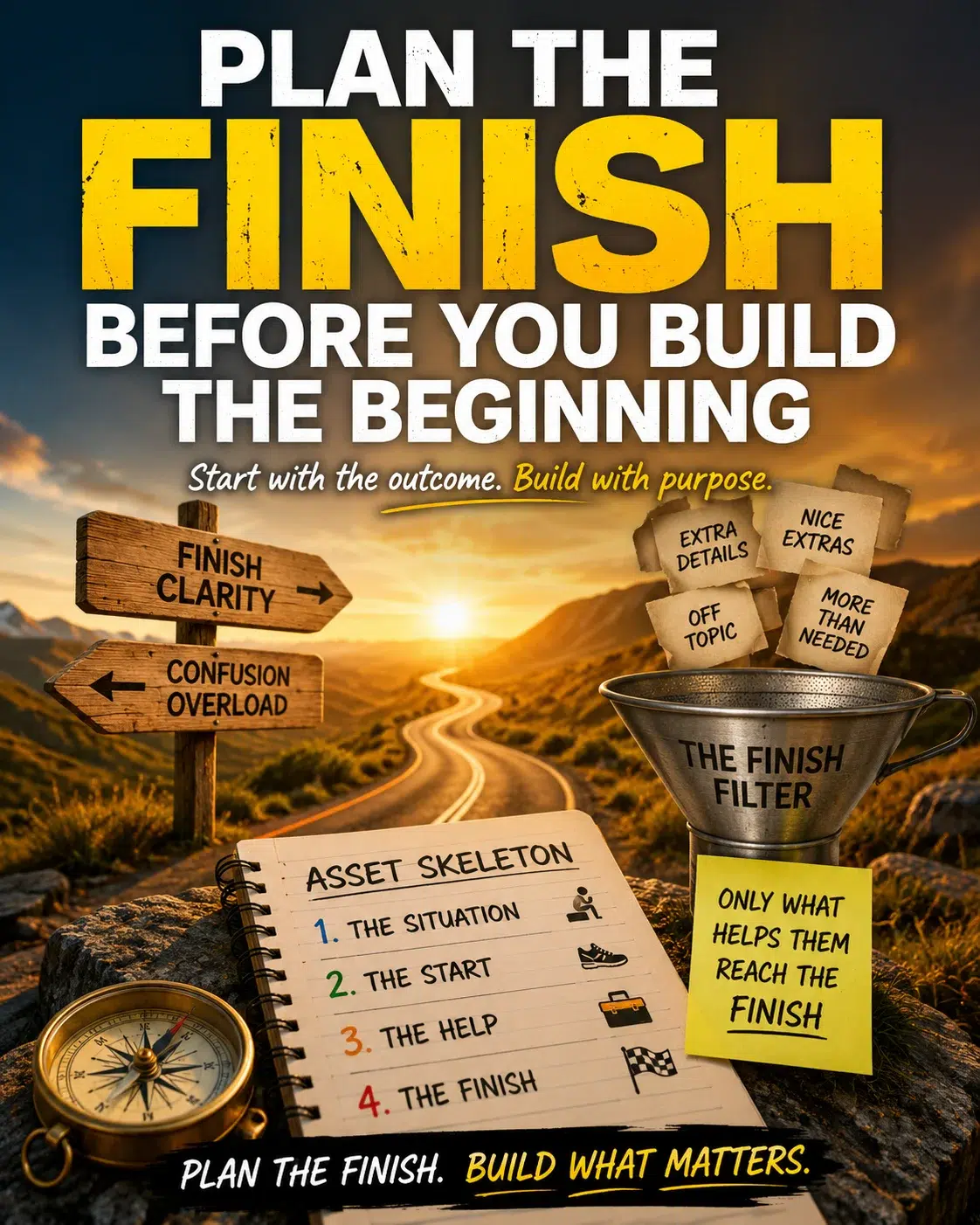 Your first useful digital resource should solve one recognisable problem rather than attempt to teach everything you know.