Check Your AI Work
Check Your AI Work Before A Polished Draft Leaves The Workshop
Use seven practical checks to give readers clear instructions they can follow.
A Polished Draft Hasn’t Passed The Job Test
A useful digital guide helps someone complete the task promised on its cover.
Start With The Result Your Reader Needs
Decide what someone should be able to do, then check whether your draft provides the help they need.
The tea has gone cold beside the laptop, but the guide looks pretty good. It has a smart cover, a cheerful introduction, and headings that suggest an organised person has been in charge. Before you publish, though, Check Your AI Work against the task you promised to help someone complete. The real inspection begins when a reader tries to use it.
Picture a beginner reading your first instruction. They pause, look back at the heading, and ask when they should carry out the task. You scan the paragraph for an answer. Somehow, it is missing. During your review, years of experience supplied that detail so smoothly that you never noticed the gap. The reader has reached the edge of the written guidance and needs more information.
This gives you a practical starting point. Ask whether someone can complete the intended task with the instructions provided. Your answer will help you decide what needs attention first. A missing step deserves work before another round of cover colours. Otherwise, you could spend the afternoon improving the appearance while the reader remains stuck on the same unanswered question.
Give The Draft A Clear Job
 A tradesperson inspects a finished job by checking how it works. A digital guide deserves the same care. Its title makes a promise, and its contents should provide the help needed to fulfil that promise. To review it fairly, begin with a purpose you can test.
A broad subject gives you plenty to discuss but little guidance about when the work is complete.
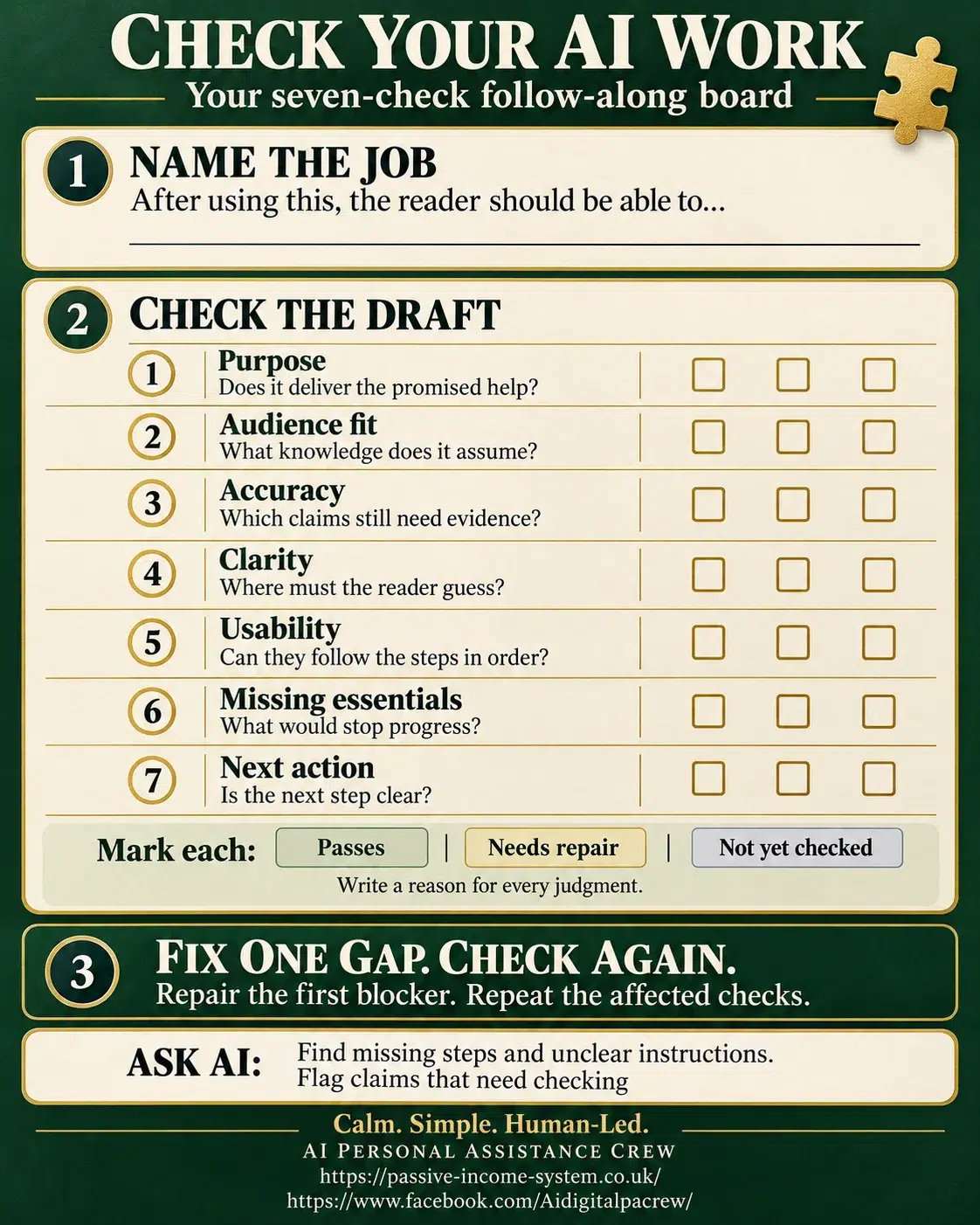
Write one sentence that begins with the words After using this guide, the reader should be able to… Finish that sentence with a specific action, such as choosing the correct file to upload or deciding whether a patio plant needs watering.
Then Check Your AI Work against that action: does the guide provide enough clear, accurate information for a beginner to complete it?
Then Check Your AI Work against that action: does the guide provide enough clear, accurate information for a beginner to complete it?
Then name a specific action or decision. Helping someone understand gardening is a large assignment. Helping a beginner decide whether their patio plants need watering gives you a clearer task. You can inspect the draft for the information that particular decision requires.
When you Check Your AI Work, keep that sentence beside you. Read each section and consider how it contributes to the promised outcome. Useful background can stay where it helps the reader understand an instruction. However, the central task needs enough attention to stand on its own. A fond account of your favourite garden will not answer a watering question on Tuesday morning.
Then name a specific action or decision. Helping someone understand gardening is a large assignment. Helping a beginner decide whether their patio plants need watering gives you a clearer task. You can inspect the draft for the information that particular decision requires.
When you Check Your AI Work, keep that sentence beside you. Read each section and consider how it contributes to the promised outcome. Useful background can stay where it helps the reader understand an instruction. However, the central task needs enough attention to stand on its own. A fond account of your favourite garden will not answer a watering question on Tuesday morning.
Check Your AI Work Through A Beginner’s Eyes
Consider an illustrative example. A retired gardener wants to create a short guide for people growing their first patio pots. The AI produces a tidy checklist covering suitable containers, good drainage, regular watering, and signs of plant stress. The gardener recognises each point and feels pleased. The advice feels familiar, so the first reading is reassuring.
Now place that checklist in a beginner’s hands. They have a pot and a watering can, but the instruction to water regularly leaves the timing unclear. They are also asked to watch for signs of stress without being told what to look for. The experienced gardener can supply those details from memory. The beginner needs the guide to explain them.
Before adding care instructions, check them against a reliable source for the plants and conditions described. Then use that information to explain the decision the reader needs to make. Stronger wording alone won’t close the gap. The repair needs to provide the missing help, including any conditions that change the advice or require more specific information.
Check the job before you polish the wording. Apply that rule to a craft checklist, a budgeting worksheet, or an ebook guide. Look for places where someone must guess or bring knowledge the guide has not supplied. Each stopping point gives you a concrete question to investigate and a useful reason to revise the draft.
Purpose: Does The Guide Complete Its Assignment?
Purpose is the first of our seven checks. Compare the draft with the outcome you wrote down. Does the content prepare the reader to achieve it? A guide may discuss its subject accurately yet leave the main task unfinished. Judge each section by the practical help it provides. This reveals both missing instructions and passages that belong in a different guide.
Suppose a checklist promises to help someone prepare a downloadable document. It devotes two pages to cover colours but never explains which materials the reader must include. The design advice has arrived before the basic preparation. Adding another font suggestion will make the checklist longer without answering the immediate question. The missing work is an explanation of the required contents.
As you Check Your AI Work, record that finding in plain language. For example, note that the purpose check needs a repair because the required contents are unclear. Your AI helper now has a defined task. A general request for more detail offers less direction and may produce extra paragraphs that leave the original question unanswered.
Audience Fit: Explain The Knowledge You Take For Granted
Audience fit is the second check. Think about the reader’s experience with this task. Which parts will be familiar, and which will be new? Age alone provides little guidance here. Someone who managed a business for decades may still need help saving a PDF. Equally, a confident computer user may know very little about growing plants in containers.
Underline instructions that rely on unexplained terms or assumed knowledge. Words such as export and drainage may need a short explanation. Give readers enough help to complete the step in front of them. For a document guide, that might mean explaining the required file format before asking them to save it. Keep the explanation close to the instruction so they can use it immediately.
In our gardening example, examine the request to check drainage. Does the guide identify what to inspect? Does it explain how the observation affects the watering decision? If either answer is missing, record the gap. This gives you a specific repair instead of a general concern about whether beginners will understand the whole guide.
Check Your AI Work For Accuracy Before Strengthening A Claim
Accuracy is the third check. Identify the factual statements and instructions that need support. Measurements, care advice, and claims about software features deserve careful attention. Ask what evidence supports each one and whether it applies to the situation described. Note anything you cannot yet confirm, especially when someone might act on it.
A fixed watering schedule, for example, needs to be checked against the relevant plant and growing conditions. Mark the instruction as not yet checked until you have suitable support. This makes the unfinished work visible. You can then verify the detail, narrow the claim, or remove it if the guide does not need it. Choose the change that keeps the guidance accurate and useful.
An AI helper can identify claims that need attention and compare a draft with source material you provide. You still need to check its agreement against that material. As the human gaffer, you decide whether the evidence supports the instruction. Once you’ve reviewed purpose, audience fit, and accuracy, you can follow the steps and check whether the guide is clear, usable, and complete.
Check Your AI Work Where An Instruction Leaves Doubt
The beginner is still beside the patio pot with a watering can. Your guide has explained its purpose, but the next instruction leaves a question unanswered. How should they decide whether to water today? This is where you Check Your AI Work for clarity. Examine whether the words give someone enough information to take the intended action.
Clarity is the fourth check. Look for terms such as suitable, regularly, and as required. These words can hide a decision that needs explaining. When a guide asks someone to inspect something, identify what they should examine. Then explain how their findings affect the next step, using guidance you have checked for the situation.
A repair may only need one extra sentence. Sometimes a brief example clarifies the instruction. Elsewhere, you need to explain a condition that changes the advice. Read the revised step and ask whether the original question has been answered. Adding words helps when they provide information the reader needs.
Make The Action Easy To Recognise
Imagine a checklist for someone preparing a digital guide. It tells them to make the file ready for sharing. The reader understands the aim, but the instruction gives them little to inspect. They may wonder whether they should check the pages, rename the file, or attach it to an email. One broad request hides several possible actions.
Identify the actions required for this task. Ask the reader to open the saved document, check the page order, and confirm that the promised worksheet is included. Each step now describes something they can do. The results are also easier to examine. You can check whether a worksheet is present and whether the pages appear in the intended sequence.
When you Check Your AI Work, focus on the decision behind the instruction. Explaining what a PDF is may help, but the reader also needs to identify the correct file. Likewise, a gardening definition needs to support the practical inspection. Give the explanation that enables progress, then check whether the reader can continue without another unanswered question.
Usability: Try The Steps As Written
Usability is the fifth check. Follow the instructions in their stated order, using only the information provided. Note every point where you rely on knowledge that is missing from the page. Familiar tasks require particular care because you may complete an unwritten step automatically. This rehearsal brings those hidden steps into view.
For example, an ebook checklist might ask someone to upload a document before explaining how to identify the final version. The reader may have several files with similar names. An experienced creator could choose the right one without difficulty, while a beginner might upload an earlier draft. The checklist should establish which document to use before the upload step.
Also think about the setting. A gardening checklist may be read on a phone beside the pots. A craft guide may sit among materials on a busy table. Place essential information where people can find it during the task. Clear headings and a sensible sequence can make the guide easier to use without adding much length.
Check Your AI Work By Noting The Stopping Points
Record what interrupted progress. Perhaps the guide referred to a missing worksheet or left the file choice unexplained. A specific observation gives you a clear repair. A general note about awkward wording provides less direction. Identify the step, reference, or question that caused the difficulty so you can inspect the right part of the draft.
Ask someone with the relevant beginner experience to try the guide. Let them attempt the task before explaining it yourself. Otherwise, your explanation may supply help the document should provide. Afterwards, discuss where they became unsure. Their questions can reveal assumptions you overlooked because the task is familiar to you.
You can still Check Your AI Work without a reader trial. Follow the sequence, inspect the references, and look for missing steps. An AI helper can flag likely difficulties too. Treat these as findings to examine. A text review can reveal potential problems, but it can’t confirm that a real beginner completed the task successfully.
Missing Essentials: Include What The Task Depends On
Missing essentials is the sixth check. Experience can tempt you to leave out familiar details or include everything you know. Your purpose sentence helps you choose what belongs. Return to the promised outcome and identify the information required to reach it. This keeps the review focused on the job the guide has agreed to do.
Consider what could happen if a detail were absent. Would the reader become stuck, misunderstand the decision, or make an avoidable mistake? If so, examine what explanation would prevent that problem. Save an interesting detail that doesn’t affect the task for another piece. Your short guide needs enough substance to work without becoming difficult to navigate.
Our patio-pot guide needs verified information to support a watering decision. A history of container gardening can wait. Similarly, a product-planning worksheet needs clear directions for completing its sections. A full advertising lesson may belong elsewhere. Keep the required preparation, instructions, and materials together so the reader can complete the task you promised.
Next Action: Give The Ending A Practical Purpose
Next action is the seventh check. When someone reaches the end, what should they do with the work they have completed? Encouragement can make the closing friendly, but the practical direction must stay clear. Connect it to the purpose of the guide and make sure the reader has enough information to begin.
A product-planning worksheet might end by asking the reader to choose one problem from their notes and write the intended outcome. A document checklist might finish with an inspection of the saved file before sharing. Each action follows from the work already completed. The reader can see how the guide leads into the next useful step.
As you Check Your AI Work, examine the materials required for that action. A missing template or unexplained tool can stop progress at the finish. If you find a gap, resolve it before polishing the closing paragraph. The ending should leave someone ready to use what they have learned, with the necessary instructions close at hand.
Support Each Judgment With A Reason
Your review now covers purpose, audience fit, accuracy, clarity, usability, missing essentials, and next action. Give each check one of three judgments: passes, needs repair, or not yet checked. Add a short reason based on your inspection. This gives you a useful record of what works, what needs attention, and what remains uncertain.
For clarity, the watering instruction leaves the timing unexplained. For accuracy, record that a care recommendation still needs support from a reliable source. A passing judgment also needs a reason. The next action may pass because it directs the reader to complete an included, clearly explained worksheet.
Look for a shared cause when several checks reveal problems. One missing explanation could affect purpose, clarity, and usability. A single repair may address all three. Identify that gap before requesting several rewrites. This helps your Crew fix the problem that most affects the reader and reduces the chance of adding unnecessary material.
Check Your AI Work Again After Each Repair
Your AI Personal Assistance Crew can help organise the findings. Give a helper the draft and its intended purpose, then ask it to identify specific gaps. Another helper can compare claims with source material you supply. Review proposed additions before accepting them. Factual instructions need support, and the human gaffer makes the final decision about what the guide can responsibly say.
After each repair, repeat the relevant checks. An added explanation may introduce an unfamiliar term. Moving a step may leave an old reference pointing to the wrong place. Read the changed passage in context and follow the instruction again. Check whether the reader can now complete the step without encountering the original difficulty.
Finish when the guide supports its promised task, its essential information has been checked, and its next action is clear. Keep repairing anything that prevents that outcome. Wording that already works can wait for another day. Before making a further edit, identify the practical improvement it will give the reader.
Open to See This Video, And This Is What’s Already Built,
Trained & Waiting For Your First Command.
Your Apprentice Task: Check Your AI Work On One Useful Asset
Choose one guide, checklist, or worksheet you are already creating. Write its purpose by completing this sentence: After using this, the reader should be able to… Review the draft against all seven checks. Record a judgment and a concrete reason for each one. Leave any unverified factual instruction marked as not yet checked.
Find the first gap that prevents the promised outcome and make the smallest supported repair. Follow the relevant instructions again using only the information on the page. Save the revised version with your remaining checking notes. Your progress today is one fewer place where the reader has to guess.