
Improve AI Search Visibility Before Your Business Disappears
Improve AI Search Visibility And Help Retirees Find Your Business
Clear answers help the right people discover your experience.
Improve AI Search Visibility Before Useful Advice Gets Overlooked
AI assistants are changing how people search for trusted help.
Let Human Experience Improve AI Search Visibility
Real stories give your advice authority machines cannot manufacture.
One Clear Answer Can Improve AI Search Visibility
Start with one genuine question your ideal reader needs answered.
The internet’s new gatekeepers are already deciding which businesses get mentioned, recommended and remembered. If you can improve AI search visibility now, your useful experience has a better chance of appearing when somebody asks an AI assistant for help.
Improve AI Search Visibility While The Door Is Still Open
The old internet worked like a crowded high street. You put up a sign, polished the window and hoped Google sent enough people past your door. The new internet behaves more like a personal shopper. A prospect explains what they need to ChatGPT, Google AI Mode, Copilot or another assistant, and the machine returns with a handful of suggestions.
That is a much bigger change than it first appears.
People may no longer visit ten websites, compare twenty blue links and read six articles before making a decision. They can ask one detailed question and receive one organised answer. If your website, experience or product helps shape that answer, you remain in the game. If the machine cannot understand what you do, your carefully written pages may be left sitting in the dark.
 For retirees building a small online business, this is not bad news. In fact, it may be the most encouraging development we have seen for years.
You do not need to outspend giant companies. You do not need to publish ten articles a day. Nor must you dance about on social media like a performing seal with a ring light. You need to become clear, useful and easy for an AI system to understand.
That is the real prize.
When somebody asks, “How can I earn a small online income after retirement without becoming technical?” your website should contain a plain, trustworthy answer. When they ask how to create a first digital product, find interested prospects or make a first affiliate commission, your pages should show genuine experience rather than recycled waffle.
AI search rewards the business that answers the question properly.
A Quiet Revolution Has Reached The Search Box
For years, online marketers fought over keywords. They studied search volumes, counted phrases and tried to climb above competitors in Google. Some produced excellent work. Others stuffed the same words into every available corner until the article read like a ransom note assembled by a robot.
The public became tired of it.
Now the search itself is becoming a conversation. A prospect can describe their age, experience, worries and intended outcome in one request. Instead of typing “make money online,” they might ask:
“I am 67, recently retired and not confident with technology. What is the simplest way to turn my working experience into a small digital product without spending a fortune?”
That question contains the prospect’s situation, fear and desired result. It is pure WIIFM – What Is In It For Me?
An AI assistant then searches for information capable of answering the whole problem. It looks for clear explanations, relevant examples, trustworthy sources and content that matches the person’s circumstances. A vague page shouting about “financial freedom” offers very little help. A practical article explaining how one useful lesson can become a checklist, worksheet or short guide offers far more.
This is where our ordinary life experience becomes valuable.
You may believe that everybody knows the lessons you learned as a plumber, carer, shopkeeper, engineer, teacher, office worker or parent. They do not. More importantly, beginners often need those lessons explained without jargon or showing off.
To improve AI search visibility, stop writing at an imaginary search engine and start answering a real person. Give the problem a name. Explain why it happens. Show the first sensible step. Include the mistakes that experience taught you to avoid.
Clarity is becoming a serious business advantage.
The Machines Cannot Recommend What They Cannot Understand.
There is no little robot sitting inside your website, admiring your colour scheme and nodding thoughtfully at the logo. AI systems work from the information available to them. They need clear signals about who you help, what problem you solve and why your answer deserves attention.
Imagine entering a traditional Fleet Street newsroom with a story.
The editor would not wait twenty paragraphs while you cleared your throat. He would bark the questions that mattered. Who is this about? What happened? Why should the reader care? What is the evidence? What happens next?
AI search is asking much the same thing.
A homepage saying, “Welcome to my website, where dreams become possibilities,” may sound pleasant, but it explains almost nothing. Compare it with: “We help beginners over sixty use AI to turn their experience into simple digital products and work towards a first online sale.”
The second version gives the machine something solid to understand.
Every important page should make its subject equally obvious. The title needs to promise a specific outcome. The opening should name the reader and the problem. Subheadings should guide both people and machines through the answer. Examples should prove that the advice can be used in real life.
Your website must also agree with itself. If one page says you help retirees build digital products, another talks only about affiliate marketing, and the homepage promises general lifestyle advice, the overall picture becomes muddled.
A small business does not need to cover everything.
It needs to be recognised for something useful.
Improve AI Search Visibility With Answers Worth Repeating
Here is where the latest online gold rush will go wrong. Thousands of people will use AI to manufacture thousands of bland articles about subjects they have never experienced. The pages will be technically tidy, grammatically correct and almost completely forgettable.
We are not joining that queue.
Our advantage is not the ability to press a button and produce more words. It is the ability to combine AI assistance with a human life already lived. AI can organise the lesson, sharpen the headline and help us explain the steps. The retired human supplies the scars, judgement, humour and truth.
That combination produces answers worth repeating.
Suppose you wasted money buying product after product because every sales page promised the missing secret. A generic article might warn readers to avoid shiny objects. Your article can explain how the buying habit begins, what it costs, how disappointment feels and the rule you now use before purchasing anything.
The difference is authority earned through experience.
Useful pages should also answer the natural follow-up questions. How much does this cost? What tools are needed? Can a beginner do it? What is the first small task? What usually goes wrong? How long might it realistically take?
Answering those questions makes the article more helpful to the reader and easier for AI systems to interpret. It creates a complete little package of information instead of a thin page built around one phrase.
That is how we improve AI search visibility without trying to trick the machines. We publish the clearest, most useful version of what we genuinely know.
Your Experience Must Leave A Trail
One strong article is a start, but recognition grows through a connected body of work.
If your subject is helping retirees create a first digital product, write the supporting stories around it. Explain how to choose one useful lesson. Show how to turn it into a worksheet. Describe how to package it as a PDF. Teach the reader how to find interested prospects. Record what happened when you tested the process yourself.
Each page leaves another signpost.
Together, those signposts tell both the reader and the machine: this website understands the journey. It does not merely mention the subject once and wander away. It follows the beginner from uncertainty to a small, believable result.
That trail can include blog posts, videos, author information, FAQs, case studies and honest examples. The language should remain consistent. Your name, subject and purpose should not change every time a new idea catches your eye.
This is not about pretending to be famous.
It is about becoming unmistakably useful.
Tomorrow’s prospect may never type your website address. They may ask an AI assistant a question you have already answered. Our job is to make that answer so clear, human and practical that your work has a fighting chance of being found, understood and recommended.
The First Job Is To Make Your Purpose Obvious
Improving AI visibility does not begin with clever software, complicated code or another expensive monthly subscription. It begins with one blunt question:
What do you want your website to be known for?
If the answer requires half an hour and three cups of tea, the machines will struggle with it too.
Our purpose is straightforward. We help beginners over sixty use AI, personal experience and simple online tools to build useful digital assets and work towards their first small online sale.
That sentence identifies the people, the method and the result.
It does not promise overnight riches. Nor does it claim that every retiree will become the next internet millionaire before Sunday lunch. It tells an interested prospect precisely what help is available.
Your version may be different.
Perhaps you help retired tradespeople package their practical knowledge. Maybe you teach older beginners to promote an affiliate product without pestering friends. You could show people with limited mobility how to create a small home-based business.
Whatever the subject, write one plain sentence that describes it.
Use that sentence consistently on your homepage, About page and main workshop pages. The wording need not be repeated like a parrot, but the meaning should remain steady.
To improve AI search visibility, give the machines a clear story to follow.
Build Every Important Page Around One Real Question
The next job is to stop treating a blog post as 2,000 words that must somehow be filled.
Each page should answer one real question.
A retiree entering the online world may ask:
“How do I choose my first digital product idea?”
That question deserves one useful article. It does not need to become a wandering lecture about websites, email marketing, social media, affiliate networks and the meaning of life.
Start with the direct answer.
A good first product idea usually comes from one small problem you have already solved or one useful process you can explain. Then show the reader how to list possible ideas, choose the simplest one and test whether anybody wants it.
That gives the page a firm purpose.
Search engines and AI assistants can then connect the question with the answer. More importantly, the human reader receives the help promised by the headline.
Natural follow-up questions can become subheadings:
- What counts as a digital product?
- Does the idea need to be original?
- How can a beginner test demand?
- Which free tools can create it?
- What should the finished product include?
Those are not phrases invented to please a machine. They are questions a nervous beginner would genuinely ask.
Answer them clearly, and you create the sort of page an AI assistant may find useful when building its response.
Improve AI Search Visibility With First-Hand Evidence
There is something else our army of bland article factories cannot easily manufacture: lived evidence.
Use it.
If you are following the workshop yourself, record what happened. Show the prompt you tried, the worksheet you completed and the decision you made. Explain which instruction confused you and how you simplified it.
Even a small failure can make the article more valuable.
Suppose your first product title sounded impressive but nobody understood it. Publish the original title, explain the problem and show the clearer replacement. That little before-and-after example may teach more than five pages of theory.
This does not require exposing private information or publishing every financial detail. It means supporting advice with something solid.
First-hand evidence might include:
- An original photograph or screenshot.
- A completed checklist or worksheet.
- A brief case study.
- A mistake and the lesson it produced.
- A result you personally observed.
- An example created during the tutorial.
AI can repeat general information from countless websites. Your advantage lies in adding the part that happened at your kitchen table.
That is where ordinary experience becomes original material.
Let Your Name Stand Beside Your Advice
Anonymous content has always had a trust problem. AI-generated search makes the author’s identity and experience even more important.
Readers should be able to discover who wrote the page, why that person understands the subject and what the website exists to do.
Create a proper author biography.
It does not need to read like an honours list from Buckingham Palace. You are not applying to become governor of the Bank of England. State your relevant experience, the journey you are taking and the people you want to help.
Alan’s strongest qualification is not pretending to know everything about online business. It is being an eighty-year-old beginner who has invested time, money and graft learning how the machinery works.
He knows how confusing the language can feel. He has bought products that helped, others that disappointed and a few that appeared to have been assembled during somebody’s lunch break.
That experience matters to the intended reader.
Link every article to the same author page. Keep the author name consistent across the site. Where appropriate, connect the website to genuine social profiles and published videos.
Trust is not created by declaring yourself an expert in enormous gold letters.
It grows when your identity, subject and evidence agree.
Connect Your Articles Into One Recognisable Journey
A pile of unrelated posts resembles a filing cabinet after somebody has dropped it down the stairs.
A connected workshop tells a story.
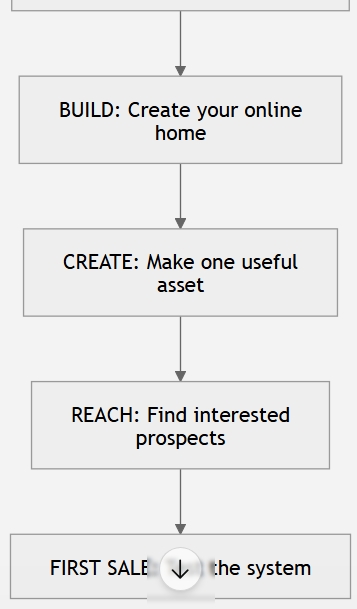
Our journey moves through clear stages: START, BUILD, CREATE, REACH, SHORTEN THE ROAD and FIRST SALE. Each stage answers a different part of the beginner’s problem, while every page contributes to the same overall result.
Internal links help readers move through that journey.
When an article explains how to choose an idea, link naturally to the page showing how to turn that idea into a finished PDF. From there, guide the reader towards finding interested prospects.
Do not scatter twenty links across a paragraph like confetti. Add the next useful link when it genuinely helps the reader continue.
Clear categories also matter. Place closely related articles together under sensible labels. Avoid creating dozens of nearly empty categories or tagging one post with every phrase that crossed your mind while writing it.
The machine should be able to recognise the structure:
Use Plain Formatting That Helps Machines Read The Page
Good presentation is not merely decoration. It helps people and machines understand the information.
Use one page title as the only H1. Inside the article, begin with H2 subheadings and use H3 or H4 headings only when the subject genuinely divides into smaller parts.
Keep paragraphs short. Introduce one idea at a time. Use lists for steps, ingredients or checks—not as a substitute for proper storytelling.
Add descriptive alternative text to useful images. Instead of calling an image IMG-4387.jpg, explain what it shows: “Retired beginner using AI to outline a digital guide at home.”
Videos should have accurate titles and descriptions. A short written summary beneath the video allows visitors and machines to understand the lesson without relying entirely on the recording.
Structured data can also help identify the author, article, video or frequently asked questions. However, it must describe what is genuinely on the page.
Schema is a label, not a magic spell.
Adding VideoObject code to a page cannot rescue a weak video or an article that says nothing. Technical signals support clear content; they do not replace it.
Do Not Bury Your Best Answers Beneath Yesterday’s Waffle
Older websites often contain pages that no longer reflect the owner’s current direction. Some can be improved. Others may need combining, redirecting or retiring.
Look carefully before reaching for the delete button.
A useful older article may already have authority, links or search history. Rewrite it around one clear question, strengthen the evidence and connect it to the current workshop.
Remove claims that are no longer accurate. Update screenshots, prices and product details. Check every external link. If a linked service has vanished into the internet graveyard, replace or remove it.
Most importantly, make the page better rather than merely changing the date.
An article does not become fresh because “2025” has been replaced with “2026.” Freshness comes from more accurate information, clearer guidance, stronger examples and a useful next step.
This matters because AI systems may encounter old pages alongside new ones. If those pages contradict each other, your website sends a muddled signal.
Consistency strengthens recognition.
Improve AI Search Visibility One Page At A Time
There will soon be an avalanche of services promising to place your business inside every AI answer by teatime.
Keep hold of your wallet.
No honest person can guarantee that ChatGPT, Google AI Mode or any other assistant will recommend a particular website. These systems change, their sources vary, and visibility can never be permanently owned.
What we can control is the quality of the trail we leave behind.
We can state clearly whom we help. We can answer specific questions. We can publish first-hand examples, identify the author and connect each article to a useful journey.
That work is slower than buying a magic button.
It is also far more believable.
Choose one important page today. Read it as though you are a retired beginner arriving for the first time. Can you identify the problem within ten seconds? Is the answer clear? Does the author show genuine experience? Is there one sensible action to take next?
Fix those four things before chasing another fashionable tactic.
AI search may be the new gatekeeper, but usefulness remains the admission ticket. Make your experience understandable, make your evidence visible and give every page a proper job.
That is how a small retiree-run website earns a fighting chance of being found.
Apprentice Task
Choose one existing page from your website and complete this five-point check:
- Write the single question the page answers.
- Add a direct answer near the beginning.
- Include one first-hand example or observation.
- Link to the next useful workshop page.
- Add or update the author information.
Then ask your AI PA:
Review this page for a beginner over sixty. Tell me who it helps, what question it answers, what first-hand evidence it contains and which parts remain unclear.
Do not rebuild the whole website today.
Improve one answer worth finding and leave a clearer trail for tomorrow.