Discover Your Hidden Skills Through Everyday Experience
What if something you’ve done almost automatically for years could save a complete beginner hours of confusion?
Why Your Most Useful Knowledge Feels Ordinary
The more a skill becomes second nature, the harder it can be to recognise its value to someone learning it for the first time.
Discover Your Hidden Skills With Three Simple Clues
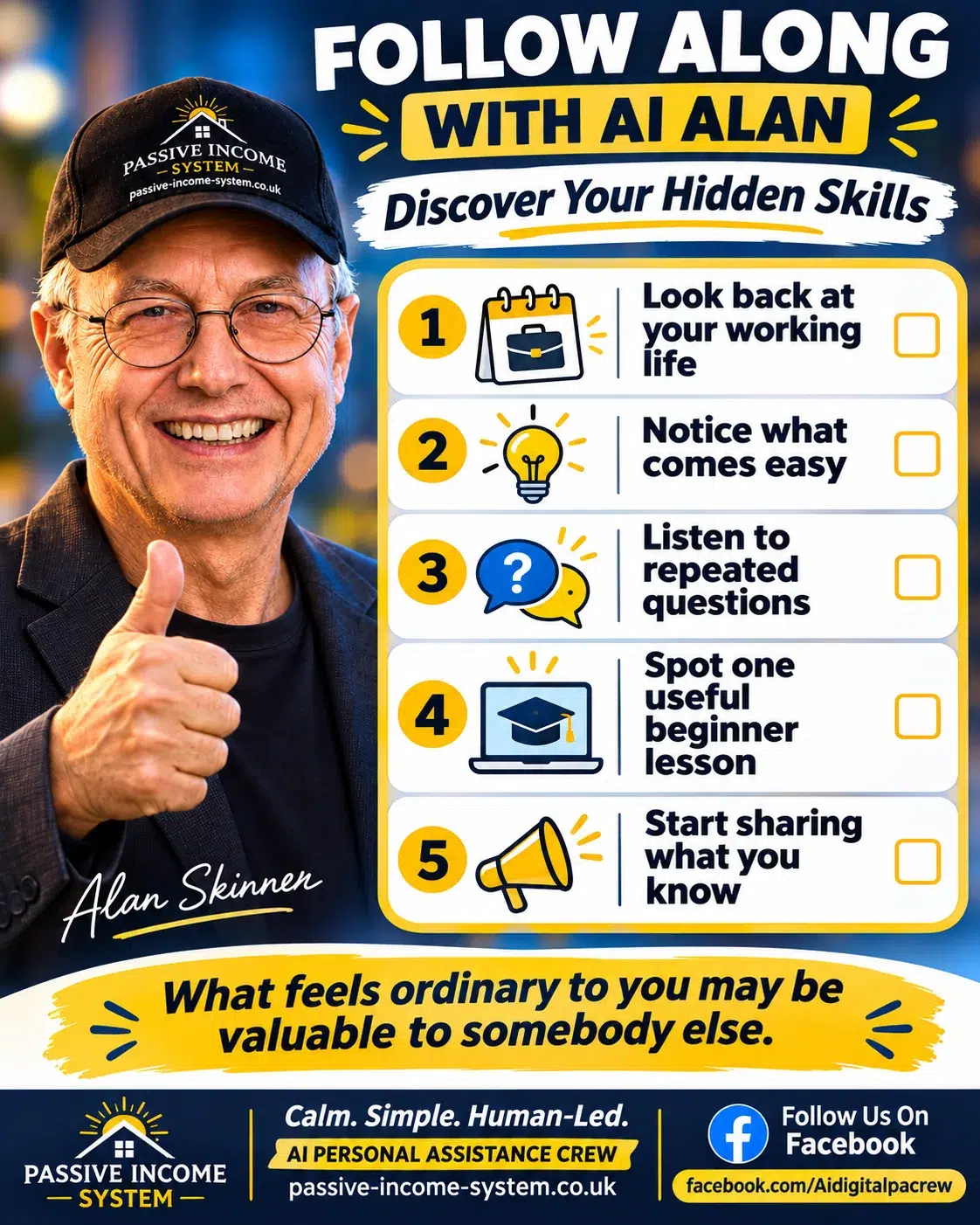
Look for problems you solve automatically, mistakes you’ve learned to avoid, and questions beginners repeatedly ask. That’s where your hidden knowledge begins to reveal itself.
The Skill You Take For Granted Could Be Someone Else’s Missing Shortcut
Discover your hidden skills by looking at the everyday problems you solve, the mistakes you’ve learned to avoid, and the questions beginners repeatedly ask. What if the knowledge you’ve almost forgotten you possess could help somebody else solve a problem they’ve been struggling with for months?
You’ve spent a lifetime learning how to do things. Some came from your working years, others from raising a family, managing a household, enjoying a hobby or solving everyday problems. Along the way, you’ve developed shortcuts that now seem perfectly ordinary. Yet somewhere, somebody is struggling with a problem you’ve already learned how to handle. They might be willing to pay for a clear explanation, a useful checklist or a beginner’s guide that saves them unnecessary confusion. The difficulty isn’t necessarily finding something new to learn. It’s recognising the value of something you already know. That’s where our AI Personal Assistance Crew comes in. We help you uncover that experience, organise it into something useful and explore whether people would value it enough to buy. You bring the knowledge. We help you give it a practical purpose.
Your Experience Could Be Someone Else’s Shortcut
Your experience could be someone else’s shortcut because you’ve already learned which questions to ask, which mistakes to avoid and which decisions matter. When you discover your hidden skills, you begin to recognise how these everyday lessons could help a beginner overcome problems that once took you years to understand.
The knowledge you use without thinking may be exactly what a complete beginner needs explained.
Imagine a retired plumber sitting at his kitchen table, enjoying a cup of tea when the telephone rings. A neighbour has discovered water beneath the kitchen sink and wants to know what to do. Before offering an opinion, the plumber begins asking questions. Where can the water be seen? When did the problem first appear? Does the moisture seem constant, or does it occur after somebody uses the sink? Has anything changed recently? Those questions might take him less than a minute to ask because decades of experience have taught him what information matters. Yet the neighbour may never have considered them.
The Missing Shortcut Is Often Hidden In Your Everyday Decisions
Beginners notice the difficulty. Experienced people recognise the questions that help them understand it.
Think about the last time somebody asked for your advice. Perhaps a neighbour wanted help growing tomatoes, a family member struggled with household paperwork, or a friend needed guidance choosing a suitable tool. You probably didn’t begin by explaining everything you’ve learned throughout your life. Instead, you identified the problem, asked a few questions and suggested a sensible starting point. That ability deserves more attention than most experienced people give it. Beginners often see only the immediate difficulty because they haven’t yet developed the judgement needed to recognise its causes. Experienced people have encountered similar situations repeatedly, made mistakes and gradually learned what matters. Their advantage isn’t simply possessing more information. It’s knowing which information becomes useful at a particular moment. Once you recognise that distinction, your everyday experience begins to look very different.
Why Experienced People Overlook Their Most Useful Knowledge
The strange thing about experience is that it can make valuable knowledge almost invisible to the person who possesses it. When you first learned a skill, every stage demanded concentration. You had to remember instructions, check your progress and sometimes begin again after making a mistake. Over time, those difficult decisions became familiar. Eventually, many seemed automatic. A lifelong gardener might notice that a plant needs closer inspection before deciding whether to change its watering routine. Someone who spent years managing an office might recognise missing information before a form is submitted. A home baker may know which observations matter when bread repeatedly fails to rise. None of these people necessarily considers their judgement extraordinary. However, a beginner may spend hours searching online for an answer because they don’t yet know what to examine or which mistakes to avoid.
This explains why asking experienced people what they could teach often produces disappointing answers. Someone who spent forty years in an occupation may say, “Oh, I just did my job.” A person who raised a family while managing a household might reply, “Everybody knows how to do that.” But everybody doesn’t know. People have different experiences, opportunities and starting points.
When you discover your hidden skills, you begin recognising the small decisions, familiar shortcuts and lessons learned through experience that could help somebody facing those problems for the first time.
The retired office worker may understand record-keeping habits that a new self-employed person finds confusing. An experienced gardener may recognise mistakes that repeatedly discourage somebody trying to grow vegetables for the first time. The problem is that experienced people frequently measure their knowledge against everything they’ve learned rather than against what a beginner needs. Once they make that comparison, their most useful knowledge appears too simple to mention.
A better approach begins by changing the question. Instead of asking, “What subject am I qualified to teach?” ask, “What difficulty can I help a beginner understand more clearly?” This shifts attention from impressive qualifications to practical usefulness. You don’t need to explain an entire occupation to help somebody make one better decision. You may only need to show them what to notice, which questions to ask or why a familiar mistake keeps occurring. That doesn’t mean every piece of experience should become paid advice. Some subjects require professional qualifications, current technical knowledge or careful safety boundaries. Others are already well covered by free information. Still, identifying a genuine beginner’s problem is a much stronger starting point than trying to package your entire working life into one enormous digital product.
The Three Clues That Reveal Your Hidden Skills
Your most useful teaching ideas often appear where automatic decisions, avoided mistakes, and beginner questions meet.
Here’s a practical method you can use without buying software or spending weeks researching possible business ideas. Look for three clues in your everyday experience. First, identify problems you now solve almost automatically. Second, remember mistakes you used to make but have learned to avoid. Third, recall questions other people repeatedly bring to you. Each clue reveals something different. Automatic decisions show where experience has developed your judgement. You can discover your hidden skills by examining the everyday problems people ask you to solve and the useful decisions you’ve learned to make through experience. Avoided mistakes expose lessons that could save a beginner frustration. Repeated questions indicate situations where people may need clearer explanations. When all three clues point towards the same problem, you’ve identified a promising subject worth investigating. This isn’t proof that people will buy a product, but it’s a sensible way to uncover knowledge that could become genuinely useful.
Discover Your Hidden Skills Through Questions Beginners Ask
The questions people repeatedly bring to you can reveal knowledge you’ve stopped recognising as valuable. Notice where your everyday experience helps somebody make a clearer decision or avoid a familiar mistake.
Take gardening as an example. A retired gardener might automatically check growing conditions before suggesting what to do about an unhealthy plant. Years earlier, that same gardener may have learned the hard way that changing several things at once makes it difficult to understand which change helped. Meanwhile, friends repeatedly ask why their plants aren’t thriving. The three clues overlap. There’s an automatic decision, a familiar mistake and a recurring beginner question. Rather than producing a general gardening encyclopaedia, the gardener could develop a short guide that shows beginners how to observe their plants and record relevant conditions before making changes. The resource would focus on one useful outcome: helping somebody approach a confusing situation more thoughtfully. Its value would come from explaining the gardener’s reasoning, not simply repeating advice available everywhere.
Now consider somebody who spent years organising paperwork in a busy office. They may automatically recognise when an important document has been filed inconsistently, remember how confusing records became before they adopted a simple naming system, and regularly hear beginners complain that they cannot find what they need. Again, the three clues reveal a practical teaching opportunity. A short guide could help someone establish a basic filing routine, understand what information to record, and create a manageable system they can maintain. The guide wouldn’t need to cover every aspect of office administration. It would solve one recognisable problem. More importantly, it would turn experience into a repeatable process beginners could apply without the original expert standing beside them.
The Difference Between Knowing Something And Teaching It
Knowing how to do something isn’t the same as knowing how to explain it. Experienced people often leave out steps because those steps became automatic years ago. A retired plumber might say, “Start by finding out when the moisture appears,” without recognising that a beginner needs help understanding which observations matter. A gardener might say, “Check the growing conditions,” when the learner doesn’t know what that involves. Someone who has maintained household records for decades might recommend keeping everything organised without explaining how to establish a simple filing system. The expert isn’t necessarily withholding information. They’ve forgotten that the beginner doesn’t share their starting knowledge. Useful teaching makes these invisible decisions visible, explains them in ordinary language and checks whether the learner can follow the process safely. If that doesn’t clear the warning, don’t keep adding sentences blindly. We’ll inspect the keyword-free sections in your final WordPress version and make a precise correction.
For our retired plumber, this distinction matters most. His experience may help a householder describe a problem accurately before contacting a professional, but that doesn’t qualify an inexperienced person to undertake hazardous repairs. A responsible beginner’s guide could explain which observations are useful, how to describe changes and when urgent professional assistance is needed. It should not encourage readers to undertake work involving gas, electricity or dangerous plumbing situations. That boundary doesn’t diminish the value of his knowledge. It makes the teaching more useful and trustworthy because it recognises where an explanation ends and professional intervention begins. An experienced person’s judgement includes understanding when not to proceed, and beginners can benefit from learning that distinction.
The same principle applies when turning knowledge into a potential digital product. The purpose isn’t to impress someone with how much you know. It’s to help them reach one useful outcome with less confusion. The appropriate format depends on the difficulty of the problem, the amount of explanation required and how the learner intends to use the information. A beginner trying to establish a household filing routine may benefit from a printable checklist. Somebody learning a creative hobby may need photographs showing each stage. Choosing the smallest useful resource helps you test whether your teaching works before investing time in something more elaborate.
Discover Your Hidden Skills Before Creating A Digital Product
Before building a guide or course, identify one beginner’s problem your experience can genuinely help solve. Test whether somebody can understand your explanation before investing time in a larger resource.
Today’s Apprentice Task: Build One Front Door
Open to See This Video, And This Is What’s Already Built, Trained & Waiting For Your First Command.
Open to See This Video, And This Is What’s Already Built, Trained & Waiting For Your First Command.
Your First Useful Discovery Starts With One Question
What do other people find difficult that your experience has made easier for you to understand?
Before looking for customers, building a website or creating a product, spend a few minutes examining your everyday knowledge. Recall three times someone asked for your help. Write down what they were struggling with, which details you noticed and what mistakes your experience helped them avoid. Don’t worry about whether the answers sound impressive. A familiar household problem may provide a more practical starting point than a complicated subject you’ve never taught before. Look for one recurring difficulty that you could explain clearly to somebody encountering it for the first time. That single discovery may become the foundation of a useful beginner’s resource, and it gives our AI Personal Assistance Crew something concrete to help you organise.
Remember this rule: Don’t start by listing everything you know. Start by noticing what a beginner doesn’t yet understand.
That’s where your experience could become somebody else’s missing shortcut. And once you’ve identified that first useful piece of knowledge, there’s another question worth exploring: how can you turn it into something a complete beginner can follow, understand, and genuinely benefit from?
Discover Your Hidden Skills Valuable Secrets For You